Why U.S. Consumers Are Paying More for Streaming Services
This article explains why streaming prices in the U.S. keep going up in 2026. It covers the recent price hikes, the real reasons behind them (ads, extra-member fees, profit pressure) and what households can do to pay less. Readers get a clear picture of current prices and simple steps to lower their monthly bill.
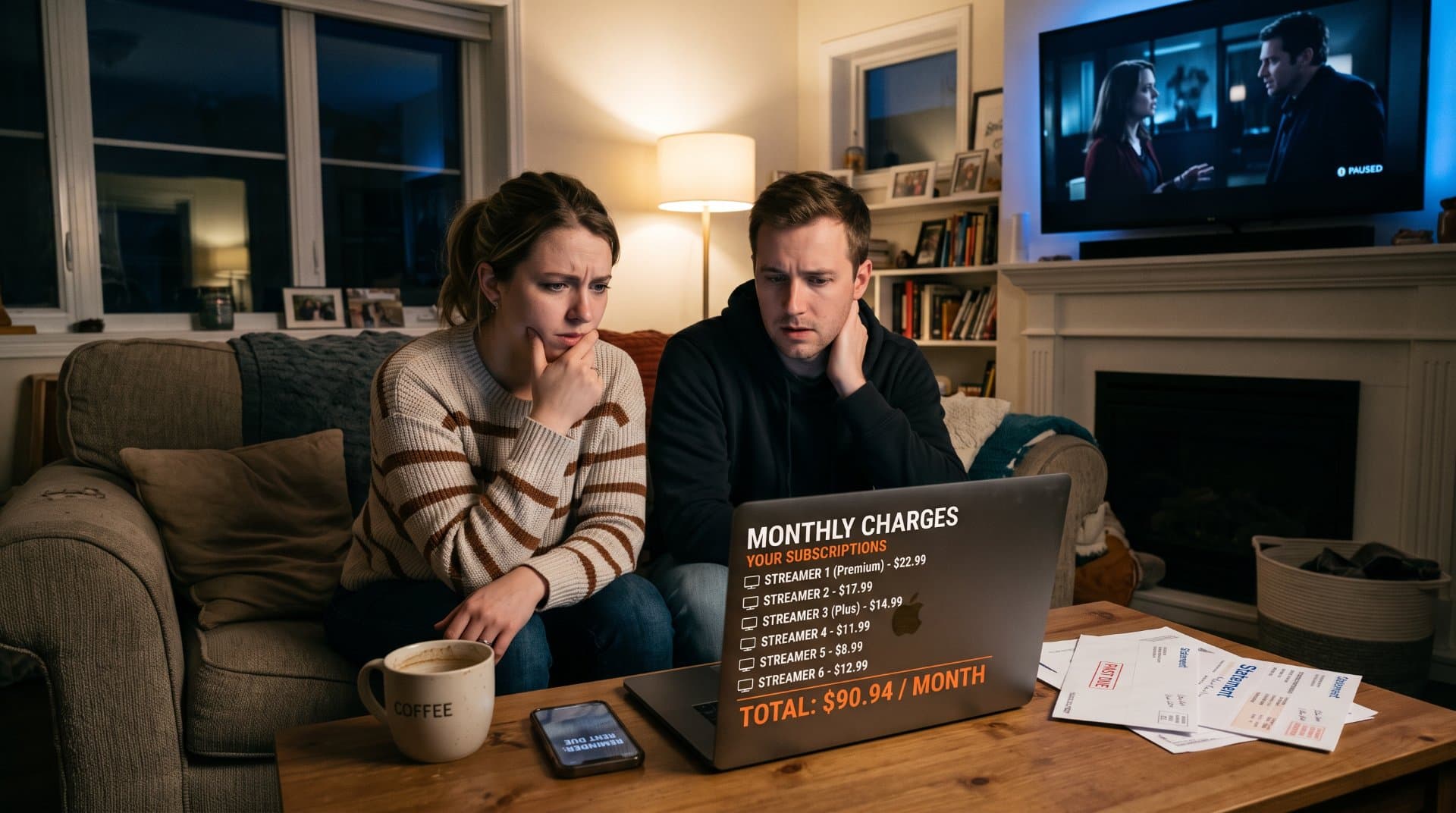
Streaming was the cheap way to watch TV. Now many people open their bill and feel the same as with cable. Almost every big service raised price in last year and some did it two times.
This article explains what changed in 2026, why companies keep doing it and what you can do so your bill not grow out of control.
The Problem
Prices went up almost everywhere. Here are the main changes from the last year:
Netflix raised all three U.S. plans on March 26, 2026. Ad plan is now $8.99, Standard is $19.99 and Premium is $26.99. Before this, they were $7.99, $17.99 and $24.99. This was the second increase in about 14 months.
Apple TV went up $2 on August 28 and now costs $14.99. It started at $4.99 in 2019.
Peacock raised prices on August 18. Premium went from $10.99 to $12.99 and Premium Plus from $16.99 to $19.99.
Paramount+ cheapest plan went to $8.99 in January 2026 and the ad-free plan is $13.99.
Prime Video changed how it works. Removing ads now cost $4.99 extra a month, up from $2.99 and Amazon renamed it Prime Video Ultra.
Disney+, Hulu and HBO Max had their hikes in October 2025. Disney+ ad-free is $18.99 and HBO Max Standard ad-free is $18.49.
One service is not the big problem. The problem is adding them all together.
According to Fortune, eight major services (Netflix, Apple TV, Disney+, Hulu, Paramount+, Peacock, HBO Max and Prime Video) cost $139.41 a month without ads, as of September 8, 2026. That is $1,672.92 in a year. If you pick the ad plans wherever possible, it is $89.92 a month.
For comparison, the average pay-TV bill in 2016 was $103.10. With inflation, that is about $143 in July 2026. So the full ad-free streaming set is only a few dollars cheaper than what people ran away from.
Not everyone subscribes to eight services, of course. But even three or four add up fast.
Why It Happens
There is not one reason. Several things are happening together.
1. Streaming companies need profit now
In the early years, services kept prices low to get many subscribers. That time is mostly over. Analysts said in March 2026 that the industry is moving from growth at any cost to higher margins. Companies say extra money goes to content and the platform.
2. Prices are rising faster than normal inflation
The Hollywood Reporter, as reported by Fortune, found streaming prices rose 11.8% in the past year. Since 2022, they went up more than three times as fast as general inflation.
3. Ads changed the plan
Ad plans are cheaper, but they are very useful to the companies. Ampere Analysis says ads are now a bigger source of money, so streamers depend less on subscription price alone.
The gap between ad and ad-free is also getting bigger. For new Netflix customers in the U.S., the price gap between Standard with Ads and Standard grew from $8.50 in August 2023 to $11 in July 2026. So the ad plan is kept cheap on purpose and the ad-free plan feels more and more expensive. It pushes people to take the ads.
4. Extra member fees and password sharing rules
Services now want money from people who share an account. Netflix extra member is $7.99 on the ad plan and $9.99 on ad-free plans. If you share with family outside your home, this can feel like a hidden price hike.
5. Less new shows, but higher price
The number of new scripted shows has gone down from the peak. FX Research counted about 600 original scripted series in 2022 and 516 in 2023. Fortune also points to analysis saying streamers now pick safer, returning shows and cheaper unscripted programs. So people pay more and the number of brand new scripted shows is smaller.
6. Sports and live content
Sports are also part of the cost. For example, Variety reported that ESPN Unlimited became 7% more expensive from September 17. This one is mostly about people who want live sports, not everybody.
What Usually Goes Wrong
Here are mistakes people make when the bill goes up:
Keeping a service because "I might watch it." Fortune quotes a search-marketing CEO who said people cancel the app they stopped opening. Many people keep paying for months before they notice.
Looking at each price alone. $10 here, $15 there looks small. Add all together every month.
Forgetting extra fees. Extra member fees and ad-free add-ons can change the real price.
Thinking the ad plan is the same thing, only cheaper. It has ads and the plan rules can be different. Check what you get before you switch.
The Solution
You cannot control what Netflix or Peacock charge. But you can control how many services you pay for and which plan.
Step 1: Write down what you pay now
Open your bank or card statement and find all streaming charges for last month. Many people find one or two they forgot.
Step 2: Check what you really watched
For each service, ask: did I watch anything last month? If not, cancel it. You can always come back.
Step 3: Try the ad plan on one or two services
The saving is real. Netflix Standard is $19.99 and the ad plan is $8.99, so you save $11 a month. On a service you use only a little, ads may be fine. On the one you watch every night, maybe ad-free is worth it.
Step 4: Rotate services
Some people call this "streaming cycling." You subscribe for a month or two, watch the shows you want, cancel and move to another service. CNET estimates this can save a household hundreds of dollars a year.
Step 5: Look at bundles
Some companies sell bundles, for example Disney offers combined plans. Compare the bundle price with what you pay separately. Do this only if you actually use all the services in it.
Step 6: Check your extra member and add-on costs
If you pay for an extra member or an ad-free add-on, look at the total. Sometimes a different plan costs less.
What to Check
After one month, look at your statement again. Is the total lower? Are you still watching what you pay for? If you cancelled something and did not miss it, that is your answer.
Put a reminder in your phone every two or three months to check again, because prices and your habits both change.
When the Solution May Not Work
If your whole family wants different shows, cutting services will not be easy.
If you need live sports, you may not have a cheap choice.
Rotating means you can miss new episodes when a season is running. Plan around the shows you care about.
Ad plans are not good for everybody and some people just dislike ads.
Will Prices Keep Going Up?
Nobody can say for sure. Ampere Analysis says the size of price increases is getting smaller. Average rises across the three biggest streamers fell from 24% to 14% in three years. Ampere thinks the market may be close to the limit of what people will pay. That does not mean prices will stop, only that big jumps may be harder.
Also, higher prices bring higher cancellations. Antenna data from May 2026, reported by Fortune, shows monthly churn of 2% for Netflix, 3% for Disney+, 4% for Hulu, 5% for Paramount+, Apple TV, Discovery+ and HBO Max and 7% for Peacock. So people do leave and companies know it.
Prices in this article are from published U.S. list prices and news reports as of October 2026. They can change, so check the service's own page before you decide.
FAQs
Is streaming still cheaper than cable?
Mostly yes, but only a little if you pay for many services without ads. Eight major services cost $139.41 a month ad-free, while the 2016 average pay-TV bill is about $143 in today's money. If you use two or three services, you can still save a lot.
Why did Netflix raise prices again?
Netflix did not give a reason like "we needed the money for this one thing." Analysts say the industry is going toward higher profit and Netflix also raised fees for extra members. Netflix raised prices on all U.S. plans in March 2026, only about 14 months after the last time.
Is the ad plan worth it?
It can be, if you do not mind ads. On Netflix, you save $11 a month compared with Standard. Look at what you get on each plan first, like number of screens and ad-free games or shows.
Which streaming service has the lowest churn?
In May 2026, Netflix had the lowest monthly churn among nine premium services tracked by Antenna, at 2%. Peacock was highest at 7%. Price is not the only reason people leave.
Can I save money without cancelling everything?
Yes. Switch one or two services to ad plans, remove the add-ons you do not use and rotate the others.
Share this story with your network
Direct citation and sharing for this investigative report.

View Point Spot
Editor-in-Chief
View Point Spot is a place for ideas, stories, insights and different points of view. We share useful, interesting and easy-to-understand content across a wide range of topics, helping readers discover something new and see the world from a different perspective.
Reader Discussion (0)
No comments yet. Be the first to start the discussion!