What Do the Warning Lights on Your Car Dashboard Really Mean?
A simple guide to car dashboard warning lights and symbols. Learn what each color and icon means and what to do when one turns on.
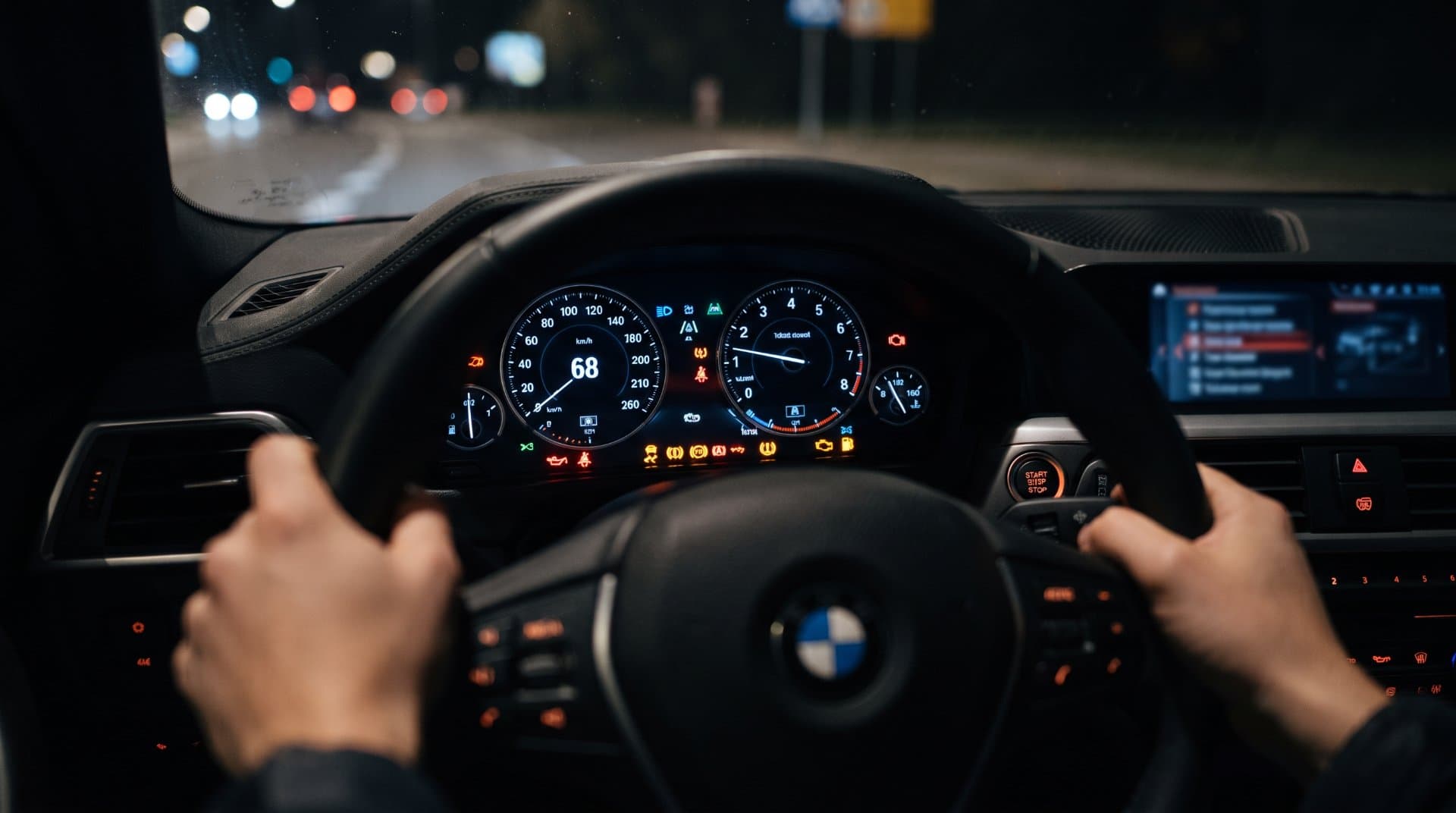
A light comes on while you are driving. You do not know what it means and you do not know if it is safe to keep going. This happens to almost every driver at some point.
Car dashboards use small icons instead of words because they need to be understood quickly, in any language. Once you know what the shapes and colors mean, they are not hard to read. This guide explains the most common warning lights, what they mean and what you should do about each one.
Why Dashboard Lights Use Colors
Before looking at individual symbols, it helps to understand the color system. Most cars follow the same basic rule.
Red usually means stop or take action right away. It often points to a safety issue or something that could cause serious damage.
Yellow or orange usually means there is a problem, but you can often keep driving carefully. It is a warning to get the car checked soon.
Green or blue usually just tells you a feature is turned on, like headlights or cruise control. These are not warnings.
This color pattern is not guaranteed on every single vehicle, but it holds true for the large majority of cars sold today.
Red Warning Lights (Act Immediately)
These lights point to problems that can affect safety or cause expensive damage if ignored.
Oil Pressure Warning Light
This looks like an old oil can with a drop coming out of it. It means the engine is not getting enough oil pressure, not that the oil is simply low. Low oil pressure can damage the engine within minutes.
What to do: Pull over safely and turn off the engine. Check the oil level once it is safe to do so. If the level looks fine and the light stays on, the car should not be driven until a mechanic checks it.
Battery / Charging System Warning Light
This looks like a rectangle battery shape, often with a plus and minus sign. It means the battery is not being charged properly. This is usually related to the alternator, not the battery itself.
What to do: The car may still run for a short time using battery power alone. Try to get to a safe location or repair shop, since the engine can eventually stall once the battery runs down.
Brake System Warning Light
This is usually a circle with an exclamation mark inside parentheses or the word "BRAKE." It can mean the parking brake is on, brake fluid is low or there is a problem with the braking system.
What to do: First, check that the parking brake is fully released. If the light stays on, stop driving and have the brakes inspected. This is not a light to ignore.
Engine Temperature Warning Light
This looks like a thermometer sitting in liquid. It means the engine is overheating.
What to do: Turn off the air conditioning and if the light stays on, pull over and turn off the engine. Driving with an overheating engine can cause permanent damage in a short time.
Yellow or Orange Warning Lights (Get It Checked Soon)
These lights are less urgent than red ones, but they should not be ignored for long.
Check Engine Light
This is shaped like an engine block, sometimes just called "Check Engine." It is one of the most misunderstood lights because it can mean many different things, from a loose gas cap to a more serious engine issue.
What to do: The car can usually still be driven, but it should be scanned with a diagnostic tool soon. If the light is flashing instead of staying solid, that usually signals a more serious problem and the car should be checked right away.
Tire Pressure Warning Light
This looks like a tire cross-section with an exclamation mark in the middle. It means one or more tires have low air pressure.
What to do: Check tire pressure as soon as possible, including the spare if the car has one. Driving on a significantly underinflated tire increases the risk of a blowout.
ABS Warning Light
This shows the letters "ABS" inside a circle. It means the anti-lock braking system is not working correctly, though normal brakes should still function.
What to do: Regular braking will likely still work, but the anti-lock feature may not activate during hard braking. Have the system checked when possible, especially before driving in wet or icy conditions.
Traction Control / Stability Control Light
This usually shows a car with wavy lines behind it or the letters "TC" or "ESC." It can mean the system is actively working on a slippery road or that there is a fault in the system.
What to do: If it blinks briefly on a wet or icy road, that is normal. If it stays on constantly, the system may need to be inspected.
Common Confusion: Solid vs. Flashing Lights
Many drivers do not realize that the same light can mean two different things depending on whether it is solid or flashing.
Light Behavior General Meaning Solid light. A problem exists, but it is often safe to keep driving carefully to a service center. A more urgent problem, often requiring you to stop driving soon
This is especially true for the check engine light. A flashing check engine light can mean the engine is misfiring, which can damage the catalytic converter if driving continues.
Lights That Are Not Warnings
Not every icon on the dashboard is a problem. Some simply confirm that a feature is active.
Headlight or high-beam symbol
Cruise control indicator
Seatbelt reminder
Turn signal arrows
Fog light symbol
These are usually green or blue and turn off once the feature is switched off.
What to Do When You Do Not Recognize a Light
If a warning light appears and you are not sure what it means, here is a simple approach:
Note the color of the light. Red means more urgency than yellow.
Check the car's owner manual, which has a full page showing every dashboard symbol for that specific model.
If the car feels or sounds normal and the light is yellow, it is usually fine to drive to a mechanic.
If the light is red or something feels wrong with the car, stop in a safe place instead of continuing.
Every car brand can style these icons slightly differently, so the owner's manual is the most accurate source for your exact vehicle.
A Few Mistakes Drivers Often Make
Ignoring a light because the car "seems fine." Some problems, like low oil pressure, do not cause noticeable symptoms until damage has already started.
Assuming the check engine light always means something serious. It often does not, but it should still be scanned rather than ignored long-term.
Disconnecting the battery to turn off a light without fixing the actual problem. The light will usually come back once the issue triggers again.
Continuing to drive with a flashing warning light, which is different from a steady one and usually needs faster attention.
What Matters Most
Red lights call for immediate action. Yellow lights call for attention soon, not necessarily right now. When in doubt, the owner's manual for your specific car model is the most reliable place to confirm what a symbol means, since icons can vary slightly between manufacturers. If a light is paired with unusual noises, smells or handling, treat it as more urgent regardless of its color.
Frequently Asked Questions
Can I keep driving with the check engine light on? Often yes, for a short distance, as long as the light is solid and the car drives normally. If it is flashing, it is safer to stop and have it checked.
Why did a warning light turn off by itself? Some lights, like the tire pressure light, can turn off once the underlying issue is corrected, such as after adding air. Others may reset temporarily but return once the system checks again.
Is it safe to drive with the oil light on? No. The oil pressure light means the engine may not be getting proper lubrication and continuing to drive can cause serious engine damage within a short time.
Do all cars use the same warning light symbols? Most follow similar international symbols, but exact designs and additional icons can differ by brand and model. The owner's manual will show the exact symbols used in your car.
Related Topics:
Share this story with your network
Direct citation and sharing for this investigative report.

Afshan Yasmeen
Writer
Afshan Yasmeen is a writer and independent content creator who shares useful, well-researched, and easy-to-understand articles on her website. She enjoys exploring different topics, learning new things, and turning her research into practical information that readers can actually use. Her writing focuses on clarity, honest information, and a simple human style. She takes the time to research topics carefully and aims to explain even complex subjects in a way that feels natural and easy to follow. Through her website, Afshan shares her knowledge, ideas, findings, and helpful guides with readers from different backgrounds. Her goal is simple: to create content that is genuinely useful, trustworthy, and worth reading.
Related Coverage & Dispatches
More in Education →
Should Students Use AI for Learning?
This article looks at whether students should use AI for study. It explains how AI can help learning and how it can hurt it, using 2025 and 2026 research. It ends with simple rules, steps and a quick check for students, parents and teachers.
 View Point SpotOct 1, 2026

Why Some Students Understand a Topic but Still Perform Poorly in Exams
Many students feel they understand the lesson but get poor marks in the exam. This article explains the common reasons, like feeling of understanding, no practice recall, time pressure and exam stress. It also gives simple steps students and parents can use to fix the problem.
View Point SpotOct 1, 2026
How AI Is Changing What Students Need to Learn in 2026
AI is changing which skills matter for students. See what still needs to be learned by hand, what is new and how to use AI without losing your thinking skills.
View Point SpotSep 28, 2026Reader Discussion (0)
No comments yet. Be the first to start the discussion!