How is social media rapidly changing culture?
In this article, I will discuss the advantages and disadvantages of social media, how it is affecting and transforming our culture and how it impacts and benefits people.
In the past, whenever a new fashion, song or any novelty emerged, it would take months or even years to spread across the world; however, that is no longer the case. Today, a video can be uploaded and garner millions of views by morning; if something goes viral, people immediately follow and share it.
In this article, I will discuss culture and social media specifically, how culture is evolving day by day through social media, what the associated benefits and drawbacks are and the direction in which people are heading.
Where exactly does the problem lie?
Culture also not just traditions our language, clothing, cuisine, sense of humor, wedding things, lifestyle and way of thinking are also part of it. If we can see past, these things were shaped within the home, the neighborhood and the family. Now, however, now people from anywhere reach us through phones, laptops, social media and the internet.
Real issue now is people do not know what to follow, what is good for them and what is not. This is due to they do not find the time to reflect instead, they are mostly preoccupied with wondering what others will say.
Whatever becomes a trend it eventually turns into culture. If a particular video goes viral, people follow suit. Everyone starts making videos based on that same concept. Everyone does the exact same thing and in doing so, they present it as their culture.
Reasons for culture changing so rapidly?
Primary reason for the emergence of a trend is that once a single short video goes viral, people begin to follow it; it then becomes an integral part of their lives influencing how they live, how they go about their daily tasks, what they post on social media and how they engage with the trend itself.
Social media also picks up on all your interests. If you like shoes, you will only be shown videos or advertisements for them; if you like jewelry, that is what you will see. If you are keen on the news, you will receive news updates. If you want to view content related to travel and leisure, that is what will appear. Similarly, if you follow a specific trend, only those trends will be displayed to you and trends play a pivotal role in shaping and changing your culture.
People see what others are wearing and desire to own the same. If someone spots a celebrity in a particular outfit, it instantly becomes a trend and a sought-after brand. A product’s popularity can skyrocket or plummet based solely on whether a single person chooses to wear it and people are discovering all of this exclusively through social media.
To give a prime example, just look at the way we speak or type, people often adopt shorthand or abbreviated terms instead of using full words. "Short typing" is a perfect illustration of this. Similarly, when we want to cook something, the first thing we do is search social media to see what ingredients will make it tasty and successful. If we plan to dine at a restaurant, we first check social media to see what others think of it and read their reviews. Even when planning a wedding from pre-wedding shoots and dance choreography to decor we analyze everything via social media and often base our budget estimates on the information found there. Furthermore, with the emergence of AI, many people are turning to it for advice on their lifestyle, asking how to improve things, requesting specific tasks or simply seeking new ideas.
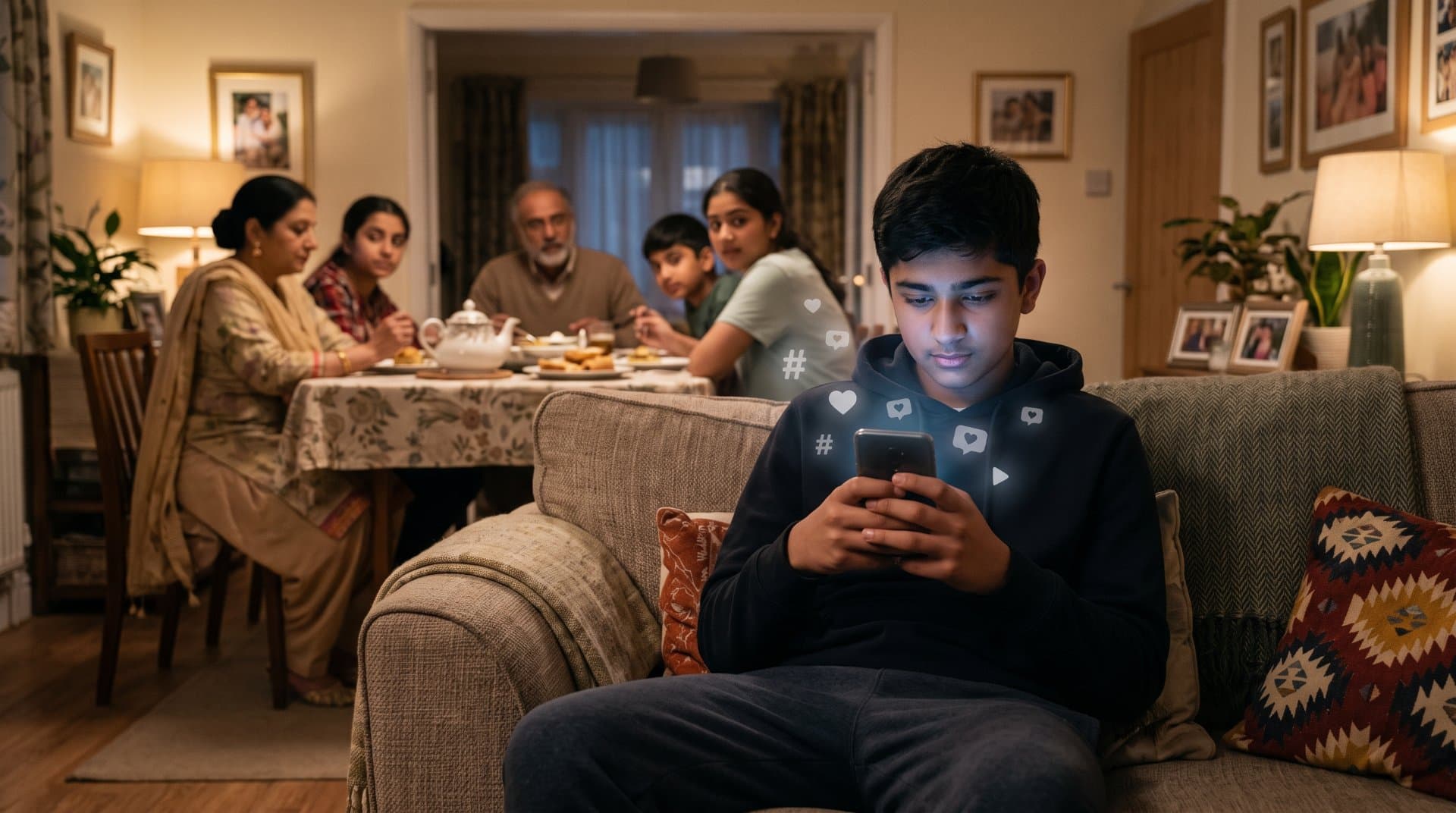
The biggest cultural change is that if there are five people sitting in a room, they will only be using mobile phones, they will be using social media, they will not be talking to each other, even if they are sitting there to talk to each other, but social media has given them such an addiction that they are the only ones left, even if earlier two people were sitting in a room, their conversations would never end, but today Today, talk is less and social media is more.
The problem is that we want to be like others; when we see someone successful, we want to become just like them overnight without considering the years of hard work they put in, whether they are a celebrity or a high earner. Also, we are weakening our own identity. If a child adopts an external culture, the language spoken at home and the family's customs and traditions will all change for them. The downside of this is that, in the future, they will lose touch with their own roots unfamiliar with their family traditions and estranged from their relatives.
Creativity is fading away among us. When we sit down to do something, our thoughts turn solely to watching social media videos. We are losing focus on everything around us, sharing unverified information, engaging in posturing and trying to emulate others all of which are having a severely detrimental impact on our culture.
Benefits
As for the benefits, many people are deriving business ideas from social media, launching startups and conveying positive messages to others, people are gaining an education and generating income through it.
One of good benefit of social media is we can learn about many things from anywhere from the world, we can seek the people's opinions before making a purchase, learn how to make things & use it to solve everyday problems.
Solution
Right way to use social media is to ask yourself while using the social media is the content is beneficial to you. Why do you like it? Is it interfering with any of your productive or important tasks? Are you using it within reasonable time limits? Have you curated your own feed? Is the news you are sharing verified? Would you like to recommend the same content to your children or friends? Does it align with your traditions, customs & culture?
How will you know your solutions are working? Check app usage history, pick up phone less often, give time to others while eating and use your mobile less during meetings. Avoid becoming anxious about trends or comparing yourself to others and educate your children and friends about social media.
FAQs
Is social media playing a significant role in corrupting culture?
Just as not all fingers are alike, the impact of social media depends on how it is used. If you use it constructively to learn or to engage in activities that benefit both yourself and others then it is beneficial for you. However, if you use it merely to waste time or engage in frivolous activities, it will corrupt your culture and have a detrimental effect on you.
Why does a trend on social media fade away so quickly?
The primary reason social media trends fade so quickly is the constant emergence of new ones, multiple trends run simultaneously, causing people to shift their attention from one to another in a matter of minutes. Take clothing, for instance: you might see a particular outfit and shortly after, videos or photos of new styles appear in your feed. You engage with any content liking it & wanting to see more. Similar, once you have liked something more, you naturally move to next thing conversely. This cycle of engagement and shifting interest is a major reason why trends die out so fast.
What impact can social media use have on children?
Social media has a much impact on children. It disrupt their education, affect their eating & sleeping habits & influence their mindset often leading them to compare themselves with others one. The specific impact depending on content a child watches. Children are maturing prematurely, becoming aware of things they are not yet ready to understand. In many ways, social media is both helpful & destructive to children.
Social media has so many downsides, would it be better for us to give it up completely?
Quitting social media not the solution, instead, you can choose how to use it. You can adjust your feed marking content you dislike or that wastes your time as "uninteresting" to remove from your interest.
Share this story with your network
Direct citation and sharing for this investigative report.

View Point Spot
Editor-in-Chief
View Point Spot is a place for ideas, stories, insights and different points of view. We share useful, interesting and easy-to-understand content across a wide range of topics, helping readers discover something new and see the world from a different perspective.
Related Coverage & Dispatches
More in Entertainment & Culture →
Why U.S. Consumers Are Paying More for Streaming Services
This article explains why streaming prices in the U.S. keep going up in 2026. It covers the recent price hikes, the real reasons behind them (ads, extra-member fees, profit pressure) and what households can do to pay less. Readers get a clear picture of current prices and simple steps to lower their monthly bill.
View Point Spot6 days agoReader Discussion (0)
No comments yet. Be the first to start the discussion!