What Hidden Costs Should You Expect When Buying a Home?
The down payment is just the start. Here's a clear breakdown of the closing costs, taxes and extra fees that catch home buyers off guard.
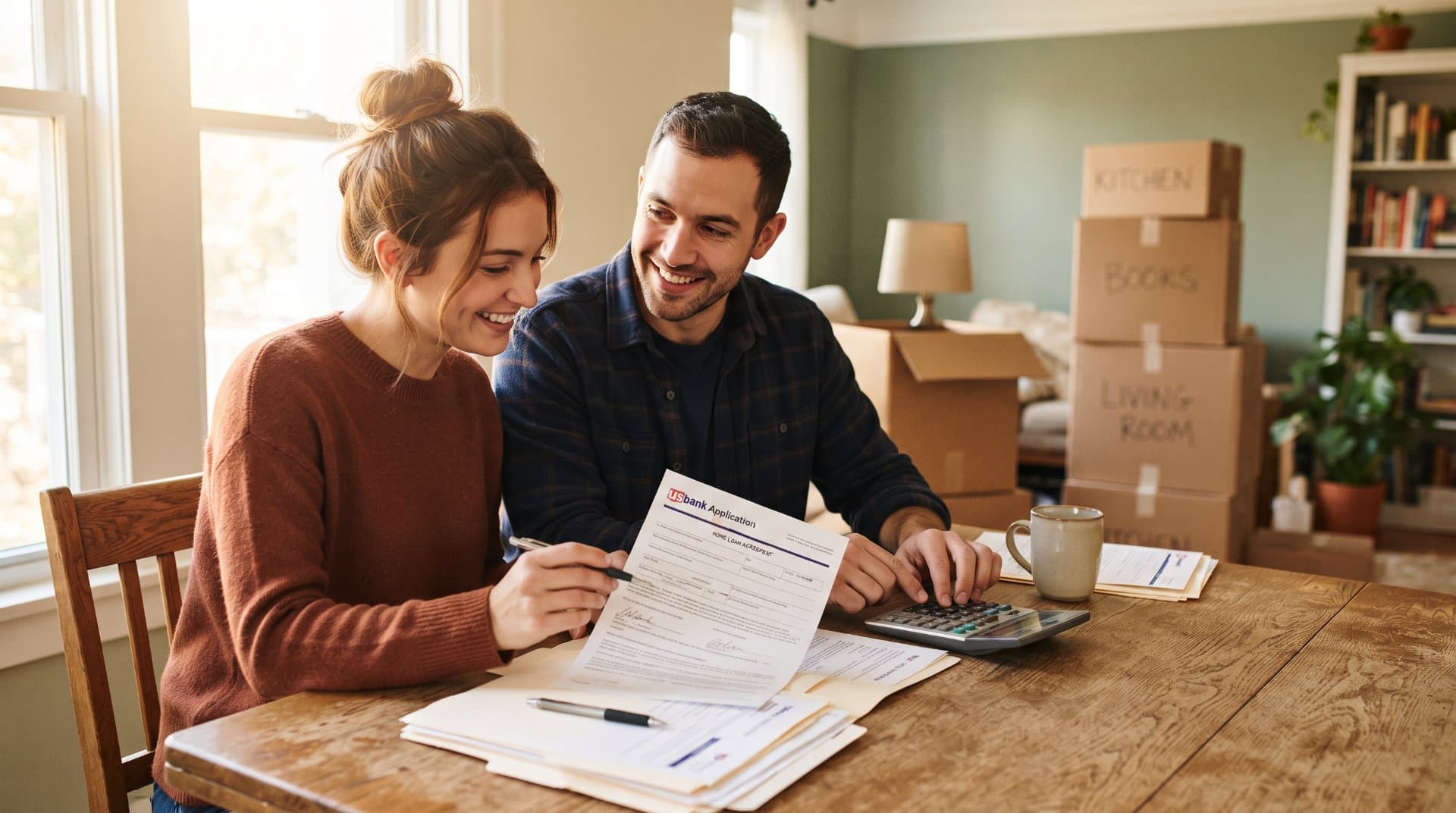
Most people budget for a home purchase using two numbers: the price of the house and the down payment. That's not the full picture. There's a second layer of costs that shows up between the accepted offer and the day you get your keys and then a third layer that starts the moment you move in.
None of these costs are secret, exactly. They're written into your loan paperwork and your local tax laws. But they're easy to miss if nobody points them out ahead of time, which is why so many buyers feel blindsided by them.
Here's what to actually plan for.
Closing Costs: The Biggest One People Forget
Closing costs are one-time fees and prepaid expenses you pay to finalize the purchase and they typically run about 2% to 5% of the home's price, on top of the down payment, not folded into it. On a $400,000 home, that's roughly $8,000 to $20,000 due at the closing table.
These costs cover things like loan origination and underwriting, the appraisal, the title search, attorney fees and insurance premiums needed to complete the purchase. Sellers usually cover the real estate commission and, depending on the area, transfer taxes and title prep. Buyers cover most of the rest.
Loan type changes the math too. FHA, VA and USDA loans each carry their own funding or guarantee fees and they cap which closing costs a buyer is allowed to cover.
The mistake most first-time buyers make isn't ignoring closing costs entirely. It's underestimating them by assuming they'll land at the low end of the range or forgetting they exist until the lender sends the paperwork.
Cash to Close Is Bigger Than the Down Payment Alone
This is the number that actually matters and it's not the same as the down payment.
Cash to close adds your down payment and your closing costs together. For example, 10% down plus 3% in closing costs on a $400,000 home comes out to roughly $52,000 in total cash needed at closing, not just the down payment amount.
Ask your loan officer for this figure specifically, not just the estimated down payment. Your loan officer should review the estimated cash to close with you, which can include the down payment, closing costs, prepaid expenses and initial escrow deposits.
You'll also get two documents that spell this out for you by law. Within three business days of applying for a mortgage, your lender must send a Loan Estimate itemizing the rate, fees and cash to close. Then, at least three business days before closing, you'll receive a Closing Disclosure with the final numbers. Read both closely and compare them line by line. If a fee jumped between the two documents, ask why.
Property Taxes Can Shift After You Buy
The property tax figure listed on a home's listing is based on the seller's current assessment, not necessarily what you'll pay.
Property taxes are set by local governments and vary by state, county, municipality, property type and available exemptions. A seller's current tax bill may not reflect what the new buyer will actually pay going forward. That's because many areas reassess a property's value when it changes hands and any exemption the previous owner had (like a senior or long-term-resident discount) usually doesn't transfer to you.
Property taxes typically range from about 0.3% to over 2% of the property's value each year, depending on where you live and they don't stay fixed once you move in. That means your monthly housing cost can rise even if your mortgage rate and balance never change.
Check with the local taxing authority directly to understand how assessments work and what exemptions might apply to you, rather than relying on the number shown in the listing.
Homeowners Insurance and PMI
Two ongoing costs tend to surprise buyers who are used to renting:
Homeowners insurance. This is required by your lender and paid separately from the mortgage in most cases, though it's often bundled into your monthly payment through an escrow account. Insurance costs have been climbing in many parts of the country, so get a real quote for the specific property before you finalize your budget, not a rough estimate based on a similar home elsewhere.
Private mortgage insurance (PMI). If your down payment is below 20%, you'll typically pay PMI and unlike a fixed mortgage payment, this cost isn't guaranteed to stay the same either. It protects the lender, not you and it usually drops off once you've built enough equity but you may need to request its removal rather than have it happen automatically.
Fees That Show Up Before You Even Close
A few smaller costs come due earlier in the process, before you get anywhere near the closing table:
Home inspection. Not legally required in most places, but skipping it can mean missing serious problems with the roof, foundation or systems that cost far more to fix later.
Appraisal fee. Required by most lenders to confirm the home is worth what you're paying.
Rate buydown (optional). Some buyers choose to pay upfront to secure a lower interest rate, which lowers the monthly payment over time. It's a useful strategy in some situations, but it needs a real cost-benefit comparison before you commit to it paying several thousand dollars upfront only makes sense if you plan to stay in the home long enough to recoup it through lower payments.
Costs That Start After You Move In
The bills don't stop at closing. A few ongoing costs are easy to underestimate:
Maintenance and repairs. A commonly used rule of thumb is to budget 1% to 2% of the home's value each year for maintenance. On a $350,000 home, that's $3,500 to $7,000 annually money that needs to exist somewhere in your budget even in years when nothing breaks.
HOA fees, if the property has one. These can increase over time and sometimes come with special assessments for larger repairs to shared property.
Utility setup and move-in costs. New utility accounts, moving costs and immediate small repairs or furnishing needs tend to hit right when your cash reserves are already lowest.
A 2026 survey found that 65% of participating U.S. homeowners felt homeownership turned out more expensive than they had expected. That's based on a private survey rather than government data, so treat it as a general signal of how common this experience is rather than a precise statistic but the pattern it points to is worth taking seriously.
A Simple Way to Budget for All of This
Instead of treating each of these as a separate surprise, build them into one plan before you start house hunting:
Get a real Loan Estimate early and ask specifically for the total cash-to-close figure, not just the down payment.
Ask your agent or lender to confirm what property taxes will likely be after reassessment, not just what the seller currently pays.
Get an actual homeowners insurance quote for the property, not a generic estimate.
Set aside a separate maintenance fund from day one, even if nothing needs fixing yet.
Keep a small buffer beyond your cash-to-close number for move-in expenses and the first month of unexpected costs.
What to Take Away From This
The purchase price and down payment are only the starting point. The real number to plan around is your total cash to close, plus a realistic sense of what property taxes, insurance and maintenance will cost once you own the place. None of these costs are hidden in the sense of being secret they're just easy to overlook until someone lays them out in one place. Ask for the specific figures in writing, compare your Loan Estimate against your Closing Disclosure and build in a buffer. That's what actually prevents the surprises.
Share this story with your network
Direct citation and sharing for this investigative report.

Afshan Yasmeen
Writer
Afshan Yasmeen is a writer and independent content creator who shares useful, well-researched, and easy-to-understand articles on her website. She enjoys exploring different topics, learning new things, and turning her research into practical information that readers can actually use. Her writing focuses on clarity, honest information, and a simple human style. She takes the time to research topics carefully and aims to explain even complex subjects in a way that feels natural and easy to follow. Through her website, Afshan shares her knowledge, ideas, findings, and helpful guides with readers from different backgrounds. Her goal is simple: to create content that is genuinely useful, trustworthy, and worth reading.
Related Coverage & Dispatches
More in Real Estate →
What Should You Check Before Buying a House?
Buying a house is a big decision. Here's a simple, practical checklist of what to check before you buy, from the structure to the paperwork.
Afshan Yasmeen7 hours ago
Why Is Location So Important When Buying Property?
Location affects a property's value, daily life and resale potential more than almost anything else. Here's why it matters and what to check.
Afshan Yasmeen7 hours ago
Is It Better to Buy a New House or an Older Property?
Trying to decide between a new build and an older home? Here's how price, maintenance, location and lifestyle should shape your decision.
Afshan Yasmeen19 hours agoReader Discussion (0)
No comments yet. Be the first to start the discussion!