How Small Daily Habits Can Change Your Life Over Time
Small daily habits add up more than you think. Here's how tiny, repeated actions slowly reshape your health, mindset and everyday life.
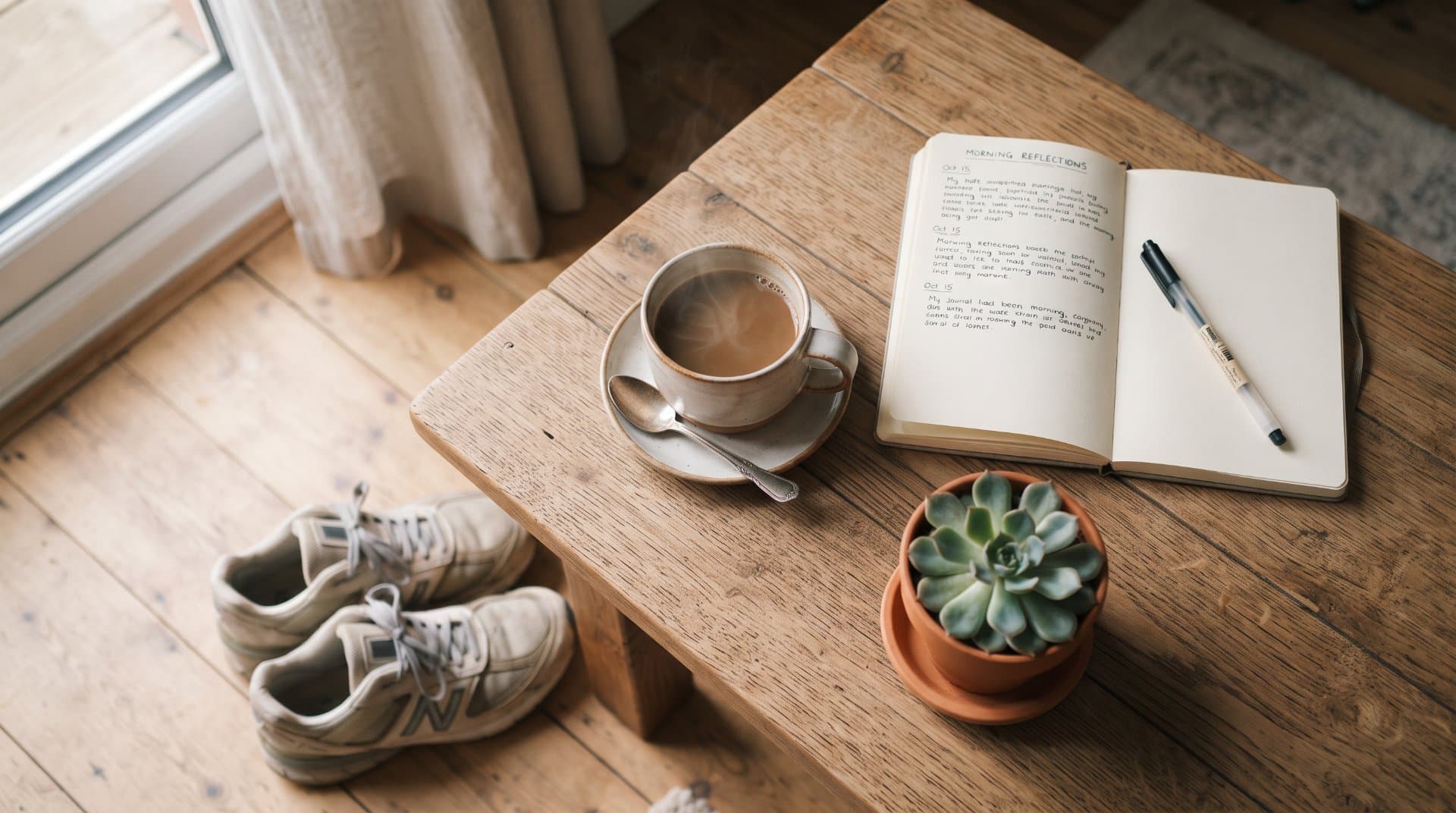
Most people want to change their life fast. They want a new body in a month, a new career in a week, a completely different mindset by next Monday. But real change rarely works that way. It usually comes from small things done again and again, for months or years, until one day you notice you're a different person than you used to be.
This article looks at why small habits matter more than big plans, how they actually work and how you can start building your own without burning out.
Why Small Habits Matter More Than Big Goals
A big goal feels exciting for a day or two. Then life gets in the way and the goal quietly disappears. A small habit doesn't ask for much, so it's easier to keep going even on a bad day.
Here's a simple way to think about it. If you improve something by just 1% a day, that change is barely visible at first. But those small improvements stack on top of each other. Over a year, the difference between doing something a little better each day and doing nothing at all becomes huge. This idea is sometimes called the compound effect and it applies to health, money, relationships and almost everything else.
The opposite is also true. Small bad habits, repeated daily, quietly damage your life in ways you don't notice until much later. Skipping sleep, scrolling for hours, avoiding hard conversations, eating poorly - none of these feel serious on any single day. The damage comes from repetition, not from one bad choice.
How Small Habits Actually Change You
It helps to understand what's happening underneath a habit, because that explains why small actions matter so much.
They change what feels normal. The first time you go for a run, it feels hard and unnatural. After a few weeks, it starts to feel like part of your day. Your brain adjusts to repeated behavior and starts treating it as normal, not extra effort.
They build proof, not just results. Every time you keep a small promise to yourself - reading ten pages, drinking more water, writing one paragraph - you're collecting evidence that you're someone who follows through. Over time, this changes how you see yourself, which affects what you attempt next.
They remove decision fatigue. A habit doesn't need a decision every time. You don't debate whether to brush your teeth; you just do it. When good behaviors become automatic, you save mental energy for things that actually need thought.
They create room for bigger habits. A small habit is often a doorway to a bigger one. Someone who starts with a five-minute walk often ends up walking for thirty minutes a few months later, without ever deciding to "become a runner." The habit grew on its own once it took hold.
Common Mistakes People Make With Habits
Most people don't fail because they lack willpower. They fail because of a few common mistakes.
Starting too big. Trying to wake up at 5 a.m., work out for an hour, meditate and read every single day - all starting tomorrow - rarely lasts more than a week.
Relying on motivation. Motivation comes and goes. Habits that depend on "feeling like it" fall apart the first time you're tired or busy.
No clear trigger. A habit needs something that reminds you to do it - a time, a place or another habit it's attached to. Without a trigger, it's easy to forget.
Expecting quick results. Small habits often show very little visible change in the first few weeks. People quit right before the results would have started showing.
All-or-nothing thinking. Missing one day doesn't ruin a habit. Deciding you've "already failed" and giving up completely is what actually ruins it.
How to Build a Small Habit That Actually Sticks
1. Make it smaller than you think it needs to be. Instead of "exercise for 30 minutes," start with "put on my shoes and walk for five minutes." A habit that's almost too easy to skip is much easier to keep than one that feels like a big task.
2. Attach it to something you already do. This is sometimes called habit stacking. For example: "After I pour my morning coffee, I will write down one thing I'm grateful for." The existing habit acts as a reminder for the new one.
3. Track it, but keep it simple. A basic checklist or a calendar with an X on each successful day works well. Seeing a streak build up gives a small but real sense of progress.
4. Expect to miss a day. Life happens. The goal isn't perfection - it's getting back to the habit quickly after a missed day, rather than treating one skip as the end of the habit.
5. Change your environment, not just your intentions. It's easier to build a reading habit if a book is on your pillow than if it's on a shelf across the room. Small changes to your surroundings often matter more than willpower.
6. Review and adjust every few weeks. If a habit consistently feels impossible to keep, it might be too big, poorly timed or attached to the wrong trigger. Adjust it instead of abandoning it completely.
What Small Habits Look Like in Real Life
Small habits don't have to be dramatic to matter. A few examples:
Drinking a glass of water before your morning coffee
Writing three sentences in a journal before bed
Putting your phone in another room while you eat
Doing ten push-ups before you shower
Reading two pages of a book instead of checking social media first thing
Sending one message to someone you care about each day
Setting out tomorrow's clothes before you sleep
None of these will change your life in a day. But after six months of doing even two or three of them consistently, most people notice real differences in their energy, focus and mood.
How Long Does It Take to See a Difference?
There's no exact number of days that works for everyone, since it depends on the habit and the person. What matters more than the exact timeline is this: the early weeks usually feel slow and unrewarding and that's normal, not a sign of failure. The visible change tends to show up later than people expect, which is exactly why so many people quit right before it would have appeared.
Is This Approach Right for You?
If you've tried big, dramatic changes before and they didn't last, small habits are worth trying instead. They ask less of you on any given day, which makes them realistic to keep even during busy or stressful periods.
This approach is less suited to situations where you need fast results for a specific deadline - in that case, a more intense short-term plan might make more sense. But for lasting, long-term change in your health, work or mindset, small daily habits, kept consistently, tend to outperform short bursts of big effort.
Frequently Asked Questions
How many habits should I build at once? Start with one or two. Trying to build five new habits at the same time usually leads to giving up on all of them.
What if I miss a day? Continue the next day. One missed day rarely matters. What matters is whether you go back to zero for weeks afterward.
Do small habits really make a big difference? On their own, one day of a small habit changes very little. Repeated for months or years, the effect adds up in ways that are easy to underestimate at the start.
How do I stay motivated when I don't see results yet? Rely on a simple tracking system and a small trigger instead of motivation. Habits that don't depend on feeling motivated are the ones that survive slow periods.
Final Thought
Big changes are exciting to imagine, but small habits are what actually build a different life. Pick one small action, attach it to something you already do and give it more time than feels comfortable. The results usually show up later than expected - but they do show up.
Related Topics:
Share this story with your network
Direct citation and sharing for this investigative report.

Afshan Yasmeen
Writer
Afshan Yasmeen is a writer and independent content creator who shares useful, well-researched, and easy-to-understand articles on her website. She enjoys exploring different topics, learning new things, and turning her research into practical information that readers can actually use. Her writing focuses on clarity, honest information, and a simple human style. She takes the time to research topics carefully and aims to explain even complex subjects in a way that feels natural and easy to follow. Through her website, Afshan shares her knowledge, ideas, findings, and helpful guides with readers from different backgrounds. Her goal is simple: to create content that is genuinely useful, trustworthy, and worth reading.
Related Coverage & Dispatches
More in Science & Health →
Why Walking Every Day Can Be More Useful Than You Think
Walking looks simple, but doing it daily brings real benefits. Here's what regular walking actually does for your body, mind and daily life.
Afshan Yasmeen3 hours ago
Why Does Homemade Food Sometimes Taste Better Than Restaurant Food?
Ever wonder why homemade food can taste better than a restaurant meal? Here's the real explanation, from ingredients to emotion and expectations.
Afshan Yasmeen2 days ago
What Happens to Your Body When You Don't Drink Enough Water
Not drinking enough water affects your brain, energy, skin and organs faster than most people think. Here's what happens, stage by stage and how to fix it.
Afshan Yasmeen2 days agoReader Discussion (0)
No comments yet. Be the first to start the discussion!